
Best AI Creations This Week: Glasses That Hear Silent Speech (Nov 6)
Best AI creations this week: glasses that read silent speech, a Claude-built book index, a $21K image model, and a game where AI suspects lie.
The best AI creations this week (October 31 to November 6, 2026) were about input and output more than models. The standout is Subvocal, a pair of glasses that turns silently mouthed words into text using radio sensing and models trained on that signal, which drew 837 points and almost 400 comments on Hacker News. Close behind: HackerBooks, a catalogue of 16,500 books mentioned on Hacker News that its maker says Claude wrote almost entirely, and Linum's open text-to-image model trained for about $21,000. Games had a strong week too, with an LLM detective game whose suspects lie and an AI-native game engine that topped Product Hunt. I build with AI every week as a product designer and design engineer, so I picked for craft over hype, and every entry links its original post.
The best AI creations this week
Ten picks, each checked against the original source. Numbers appear only where the source shows them, and I say where they come from.
1. Subvocal: glasses that read words you only mouth

Aarush (aarushyadav on Hacker News) and a co-founder posted Subvocal on November 2. It started as a 36-hour TreeHacks prototype with electrodes stuck on the face. They dropped that approach because of sweat, interference and the fact that nobody wants electrodes on their face, and moved to low-frequency radio that passes through the mouth and changes as you silently articulate. Antennas sit in the glasses frame, and foundation models trained on that radio data decode it into text. To get enough data across different people, they ran booths in their office where paid participants read prompts while wearing the glasses. Decoding runs through a phone or laptop app with cloud processing, and the founders say latency is "under 500ms usually". Preorders are open, with shipping targeted for Q1 2027. The thread showed 837 points when I checked, and the loudest request was local, on-device inference: people do not want their silent speech going to a server.
For anyone designing input, this is the interesting part: a new channel between typing and talking. The privacy pushback is the design brief.
2. HackerBooks: 16,500 books, built mostly by Claude

Roansh posted HackerBooks on November 1, a catalogue of about 16,500 books mentioned by at least two different commenters on Hacker News since 2007, each linked to the comments that mention it. The maker says "Claude wrote almost all of it", including the data pipeline (Python and DuckDB over the HN dump) and the plain JavaScript site with static JSON on Cloudflare. They describe their own job as steering, deciding and buying the domain. The Show HN thread passed 1,860 points. It also caught a real flaw: the original label said "recommended", and a commenter pointed out that counting mentions means criticism counts too. The label became "mentioned by".
HackerBooks was itself a reply. A day earlier Andrej Karpathy posted HackerTube, a YouTube-style site of the videos Hacker News keeps recommending, and its Hacker News thread passed 2,880 points. In the comments he says Sonnet calls did the bulk of the work labelling comments, the app and deploy took about a million tokens of Claude Opus 5.5, and he only talked to Claude, apart from the API key, domain, DNS and server. Within days there was HackerTV, which turns the same videos into 24/7 channels and was also built with Claude Code, plus clones for Wikipedia links and repos. A whole genre in one week: take a community's scattered recommendations and give them a front door.
That fix is the lesson. The code was cheap. The wording was the design work, and it took a human reader to catch it.
3. Pyramid-JiT: an open image model for about $21,000

Sahil Chopra and Manu Chopra at Linum, a two-person lab, published a field note on November 4 about pjit-21k, a 2B-parameter pixel-space text-to-image model. They put the total cost at about $21,038 (8,415 H100-hours at $2.50 an hour) on 64 H100 GPUs, with a frozen Qwen3.5-4B text encoder. Weights are on Hugging Face under Apache 2.0. They are open about the limits: weak full-body rendering, trouble with crowds and interactions, and no text rendering at all, because they filtered images with text out of training. The Show HN post passed 235 points.
Designers should care because a usable image model at this price means teams can train on their own visual style instead of renting someone else's.
4. Uncracked City: a detective game where the suspects lie

Uncracked City, posted by passkey1510 on November 3, sets invented crimes in real public places and lets you question suspects played by language models, some of whom lie. The maker says Claude helps develop each case pitch, an engine generates the case, and then several models play the detective to check the case can actually be solved before it goes live. A control layer keeps each suspect inside the storyline: they can lie, but they cannot change the facts. Answers come from Haiku on AWS Lambda in about one to two seconds. It is free on Android in six languages. In the Hacker News thread the maker admitted the translations are fully AI, and an Italian speaker said it shows.
Having AI play the game to test it before players do is the idea I would steal. That is QA for content that writes itself.
5. Wanaka Studio: an AI-native 3D game engine
Yang Zhang and team launched Wanaka Studio on Product Hunt this week, where it ranked first for its day and sat second on the weekly leaderboard with a score of 458 when I checked. An agent builds the game and playtests it with rollback, while a visual editor stays in sync both ways, so you can grab a prop and move it by hand. It generates and auto-rigs 3D characters, includes multiplayer and publishes to a link that runs on desktop, phone and tablet. The listing names Tripo AI, ElevenLabs and Sketchfab among its tools. It also claims about 80% fewer tokens than Claude Opus 5.5 with Unity, which is the company's own number and not something I could verify.
The two-way sync is the part that matters. Agent tools that hide the canvas lose designers. This one keeps it.
6. The Hackintosh Reborn: an iOS app in a day, no code written by hand

Yoonsik Park wrote The Hackintosh Reborn on November 5. He needed Xcode 26 for his first iOS app, his hardware could not run it, so he installed macOS on a spare ThinkPad T490 and used the Claude Code and Codex integrations inside Xcode to build the app. He says he had a working app within a day without touching a line of code. The bigger story is the community he describes, using Claude Code with Ghidra to reverse engineer drivers. Those community results are second-hand links, as he says himself. The Hacker News discussion passed 317 points.
7. FlipMove: AI in a real animation pipeline
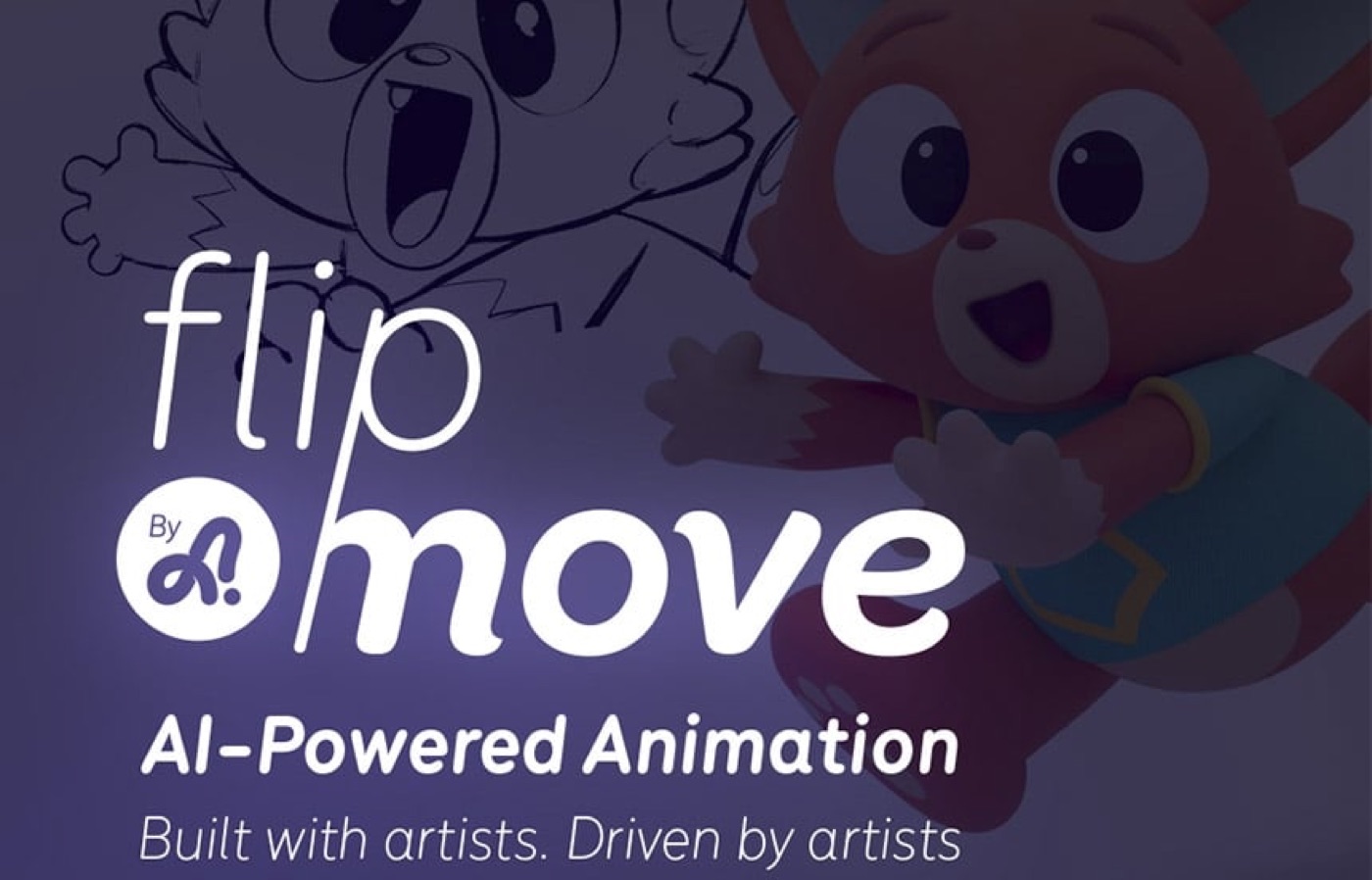
Animaj showed FlipMove at Disney Accelerator Demo Day on November 3. It turns a 2D animatic into a 3D layout with camera, props and character staging, and turns a director's note into a revised layout in about two minutes instead of twenty, delivered as a Blender scene the artist keeps working in. It is already used on Ozzy Fox, a preschool series made with Disney Jr. I like the order of operations: the artist gets a starting point, not a final frame.
8. Datasette Agent: build an app by chatting beside it

Simon Willison released datasette-agent 0.5a0 on November 3 with a panel that keeps the agent chat next to the page you are looking at. His example: he asked it to build an app to explore a table of model prices, got an LLM Price Explorer covering 185 models from 12 providers, then asked for a hacker look and got a neon green, terminal-style version. Small release, big pattern. The chat sits next to the thing it changes, so you judge the result in place.
9. nesformer: a Nintendo running inside Qwen weights

Drew Breunig (dbreunig on GitHub) published nesformer on October 30: the NES CPU, its 2 KB of RAM and a cartridge's program ROM compiled into the weights of a stock Qwen3.5 checkpoint, so the model predicts the CPU's execution one token at a time while a small host program draws the screen. The weights were not trained, a compiler computed them, building on Divyansh Agrawal's Qwenputer. The README says Super Mario Bros. runs, about 150 to 290 times slower than a real console. In the Show HN thread he says Claude Opus 5.5 built the weights and code from two prompts, and credits the result to good reference material: a public CPU test log with more than 3,000 known-good instructions.
That last point is the lesson for designers. The agent did well because the target had a spec and a test. Give your agent the equivalent, real screens and acceptance criteria, and it stops guessing.
10. Warsaw in voxels: a city you can walk through, from open data

Piotr Migdał (stared) posted Warsaw in voxels on November 2, an interactive 1-metre voxel diorama of central Warsaw where you change the date, time of day and weather, or click a pedestrian and walk them around. It fuses OpenStreetMap, Polish government LiDAR and aerial imagery, and the city's tree database for seasonal foliage, and the code is open source on GitHub. In the Show HN thread he says Opus 5.5 handles the first draft well, and that the slow part is polish: floating tree crowns, disconnected streets, bridges that look broken, checked by hand against photos.
This is the most honest description of AI-assisted craft I read all week. The draft is free now. Taste is the part that takes the hours.
This week's AI creations at a glance
| Creation | Creator | Built with | Why it matters |
|---|---|---|---|
| Subvocal | Aarush and co-founder, The Subvocal Company | RF sensing glasses, foundation models trained on RF data | A new input between typing and talking |
| HackerBooks | roansh | Claude, Python, DuckDB, Cloudflare | Code is cheap, wording still needs a human |
| Pyramid-JiT (pjit-21k) | Sahil and Manu Chopra, Linum | 64 H100s, Qwen3.5-4B encoder, Apache 2.0 | Your own image model is now affordable |
| Uncracked City | passkey1510 | Claude, Haiku, AWS Lambda | AI playtests content before players do |
| Wanaka Studio | Yang Zhang and team | Game agent, Tripo AI, ElevenLabs, Sketchfab | Agent plus a canvas you can still touch |
| The Hackintosh Reborn | Yoonsik Park | Xcode 26, Claude Code, Codex | An iOS app in a day on old hardware |
| FlipMove | Animaj | Animatic-to-Layout AI, Blender | AI as a draft inside a real pipeline |
| Datasette Agent panel | Simon Willison | datasette-agent, datasette-apps | Chat that sits beside what it changes |
| nesformer | Drew Breunig | Claude Opus 5.5, Qwenputer compiler, Qwen3.5 | Specs and tests make agents reliable |
| Warsaw in voxels | Piotr Migdał | Claude Opus 5.5, OpenStreetMap, LiDAR | AI drafts, humans polish |
From my lab
Each week I add one of my own experiments. This was a week of games, so here is mine.
Stitch: The Midnight Brew, a Halloween game built in Rive
My Stitch experiment is a small Halloween game, and the experiment page links the playable demo. It is built with Rive, using the Rive CLI, and the live page runs on Rive's WebGL2 runtime, so the art, animation and game logic all live in one Rive file instead of being split across a design tool and a game engine. That is the same instinct behind Wanaka's two-way editor: the place you draw should be the place it plays. Rive is a design tool first, which is why I reach for it. When the motion and the logic share a file, a designer can change how the game feels without waiting on anyone. More builds like this are on my AI experiments page.
What this week means for designers
The loud news this week was model news: new open weights from Moonshot, OpenAI's Images 2.6, and a stream of agent launches on Product Hunt. Most of it you cannot use in a client project on Monday. The creations above you can learn from right now, and they share a pattern. The AI does the bulk of the production, and the human work moves to the edges: what the label says (HackerBooks), what the player is allowed to break (Uncracked City), where the artist takes over (FlipMove), and whether people will trust the input at all (Subvocal).
The hype check. Subvocal is a preorder, not a shipped product, and 500 milliseconds is not instant. Wanaka's token savings are its own claim. The Hackintosh community results are links to screenshots. Uncracked City's players found weak translations and bland dialogue. None of that makes these less interesting, but it should stop anyone telling a client that one prompt replaces a team.
My take: the craft is not shrinking, it is moving. I saw the same thing designing AI tools at ViewStats, where the hardest part was never the interface but the trust around it, which is the story in my ViewStats creator tools case study. If you are wondering what that means for your job, I wrote about what AI actually replaced in my design work, and about what a design engineer actually does, because the people who do best in weeks like this are designers who can open the code and change it.
A short checklist if you want to try one thing from this week: pick one of your own projects, let an agent build a rough version, then spend your time on the three things it cannot judge for you: the words, the edge cases and the moment a user has to trust it. If you want that kind of work inside your product, with someone who designs it and ships the code, work with me as your design engineer. Last week's issue, with 50 AI agents running a Minecraft town, is the October 30 roundup of AI creations.
Frequently asked questions
What were the best AI creations this week?
For October 31 to November 6, 2026: Subvocal (glasses that decode silently mouthed words), HackerBooks (a Claude-built catalogue of books mentioned on Hacker News), Linum's pjit-21k open text-to-image model trained for about $21,000, Uncracked City (a detective game with lying LLM suspects), Wanaka Studio (an AI-native 3D game engine), Yoonsik Park's iOS app built in a day on a Hackintosh with Claude Code and Codex, Animaj's FlipMove animation workflow, Simon Willison's Datasette Agent panel, Karpathy's HackerTube, nesformer (a Nintendo CPU compiled into Qwen weights) and a walkable voxel Warsaw built with Claude Opus 5.5.
What AI tools are people using to build apps and games right now?
This week the named tools were Claude and Claude Code for whole sites and data pipelines, Codex and Claude Code inside Xcode 26 for iOS apps, Haiku for fast in-game dialogue, Tripo AI and ElevenLabs inside Wanaka for 3D characters and sound, and Blender as the hand-off point for AI animation. In my own experiments I mostly use Figma, Claude and the Figma MCP, plus Rive for interactive motion and games.
Can you really build an app with AI without writing code?
Two makers this week say they did: HackerBooks was written almost entirely by Claude, and Yoonsik Park built a working iOS app in a day without typing code. Both still made the decisions, and HackerBooks needed a human reader to fix a misleading label. AI writes the code; you still own what it says and how it behaves.
What is new in AI this week for designers?
Two shifts. New input methods are getting real (silent speech through glasses), and AI creation tools are keeping an editable canvas next to the agent (Wanaka's synced editor, Datasette's side panel, FlipMove's Blender hand-off). Both reward designers who think about trust and control, not just visuals.
How often is this AI roundup published?
Once a week, with six to ten creations from the last seven days and one or two of my own experiments.


hello@ayoubka.com
If you have a web or mobile app idea in mind or you need some advice about product design, feel free to get in touch ✉️