
Will AI Replace Product Designers? What It Replaced in My Work
I ship apps end to end with AI, from Figma to App Store. Here is what AI replaced in my product design work, what it never touched, and what to learn now.
Will AI replace product designers? Not the ones who decide what should exist. It is already replacing a lot of the production work around them: redlines, handoff files, static mockups that nobody can touch, and the long wait between "here is the design" and "here is the build". I see this in my own work. I now take experiments from idea to design to development to the App Store, with motion and sound effects, as one person. What AI did not take is the part where someone has to choose, and be accountable for the choice. Here is what changed, task by task.
What I mean by "replace", because the word is doing a lot of work
Most arguments about this question fail because people mean different things by replace. One person means "will my job title disappear". Another means "will a model produce screens as good as mine". A third means "will my company hire fewer designers".
I find it more useful to split the job into tasks and ask which tasks moved. A product designer, as I describe in what a product designer does, is responsible for the problem, the decision and the outcome, not only the pixels. Some of those tasks are now cheap. Some are exactly as hard as they were ten years ago. A few got harder, because when building is fast, choosing the wrong thing is also fast.
So my honest answer has two halves. AI is replacing parts of the work. It is not replacing the person who owns the decision. Whether that is good news depends on which half of the job you spend your days in.
What AI actually replaced in my workflow
I have been a product designer for more than 12 years. For most of that time, a design ended as a file that someone else turned into software. That handoff is the part that changed most.
At ViewStats, the creator platform built by the team behind MrBeast, my role grew from Lead Product Designer into design engineer. I worked directly in the codebase with Cursor, Claude Code, React, TypeScript and GitHub. I designed, prototyped, built React components, opened pull requests and reviewed implementation. Iteration cycles got dramatically shorter, because the distance between an idea and a working version shrank to almost nothing. The details are in the ViewStats creator tools case study.
Then I pushed it further with my own builds. The 17 AI design experiments on my site are working builds, not mockups: websites, native iOS apps and a game. Most start in Figma, then go through Claude with the Figma MCP to turn the design into code. From there it depends on the idea: SwiftUI for native iOS, Metal shaders, WebGL and three.js for the web, Rapier, Matter.js and SpriteKit for physics, Kling and Higgsfield for AI video motion, ElevenLabs and Web Audio for sound.
Take Payno, the frozen card experiment. It is a bank card app where freezing your card actually freezes it, and you tap the ice three times to shatter it. The tools listed on it are Figma, Claude, Figma MCP, SwiftUI, alpha video and physics. A few years ago, an idea like that would have stayed a Dribbble shot, or become a ticket that waited behind real work. Now the designer can ship the interaction itself.
Or the LevelUp celebration screen: a native iOS level-up screen with an animated badge, sound and confetti you can throw, built with SwiftUI, SpriteKit physics, HEVC alpha video and ElevenLabs. Motion and sound used to belong to other specialists. Now they are part of the same loop.
What AI did not replace: the decision
None of those tools told me what to build. None of them knew that a frozen card should feel physically frozen, or that a celebration needs sound to land. That is taste and judgment, and it sits with a person.
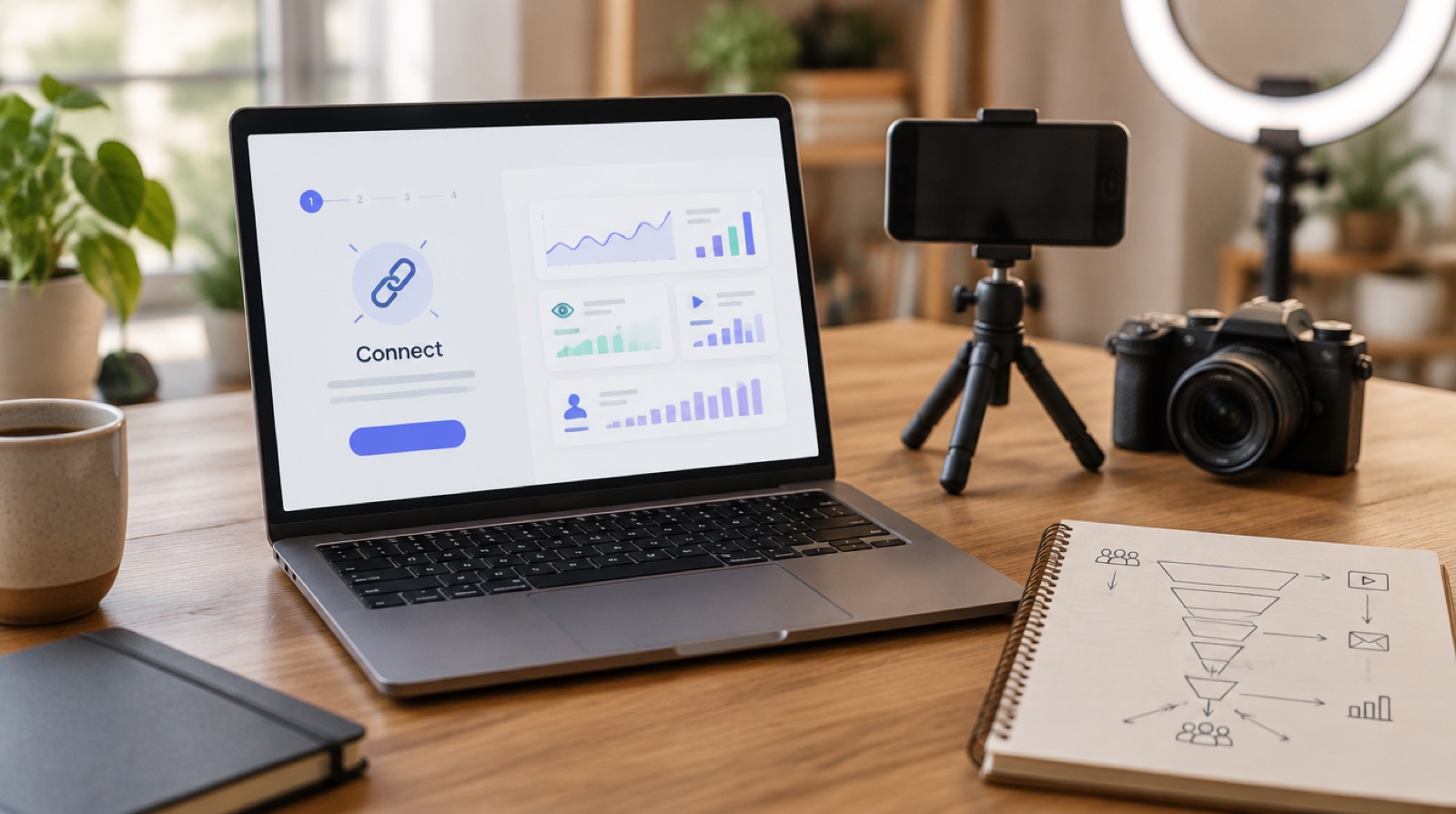
The clearest proof I have is not an experiment. It is a research finding. On ViewStats, many creators signed up but never connected their YouTube channel. Funnel data showed where they stopped. Interviews, Discord feedback and support requests showed why: they did not understand what they would gain. The fix was a design decision, not a generation prompt. Show value first. Ask for trust second. Channel connection went from 13% to more than 65%.
No model would have found that by producing more screens. It took someone listening to creators and deciding that the problem was trust, not the button. The same project taught me that creators were not looking for more analytics. They wanted confidence about what to make next. People rarely want more information. They want clarity. That sentence is a product decision, and it shaped everything we designed.
And then there is accountability. When we launched AI thumbnail tools at ViewStats, they went from concept to launch in roughly two weeks, and they drew public criticism about the impact on artists and thumbnail designers. The BBC covered the backlash. My view then and now: AI tools already existed everywhere, and the challenge is designing tools that help creators move faster while keeping humans at the center of the creative process. Product decisions do not exist in isolation. A model can generate a feature. It cannot stand behind it when the internet has questions.
Will AI replace product designers? A task by task table
This is how I would split the job today, based on my own work. Your mix will differ, but the pattern is the useful part.
| Task | Before AI | In my workflow now | Who still decides |
|---|---|---|---|
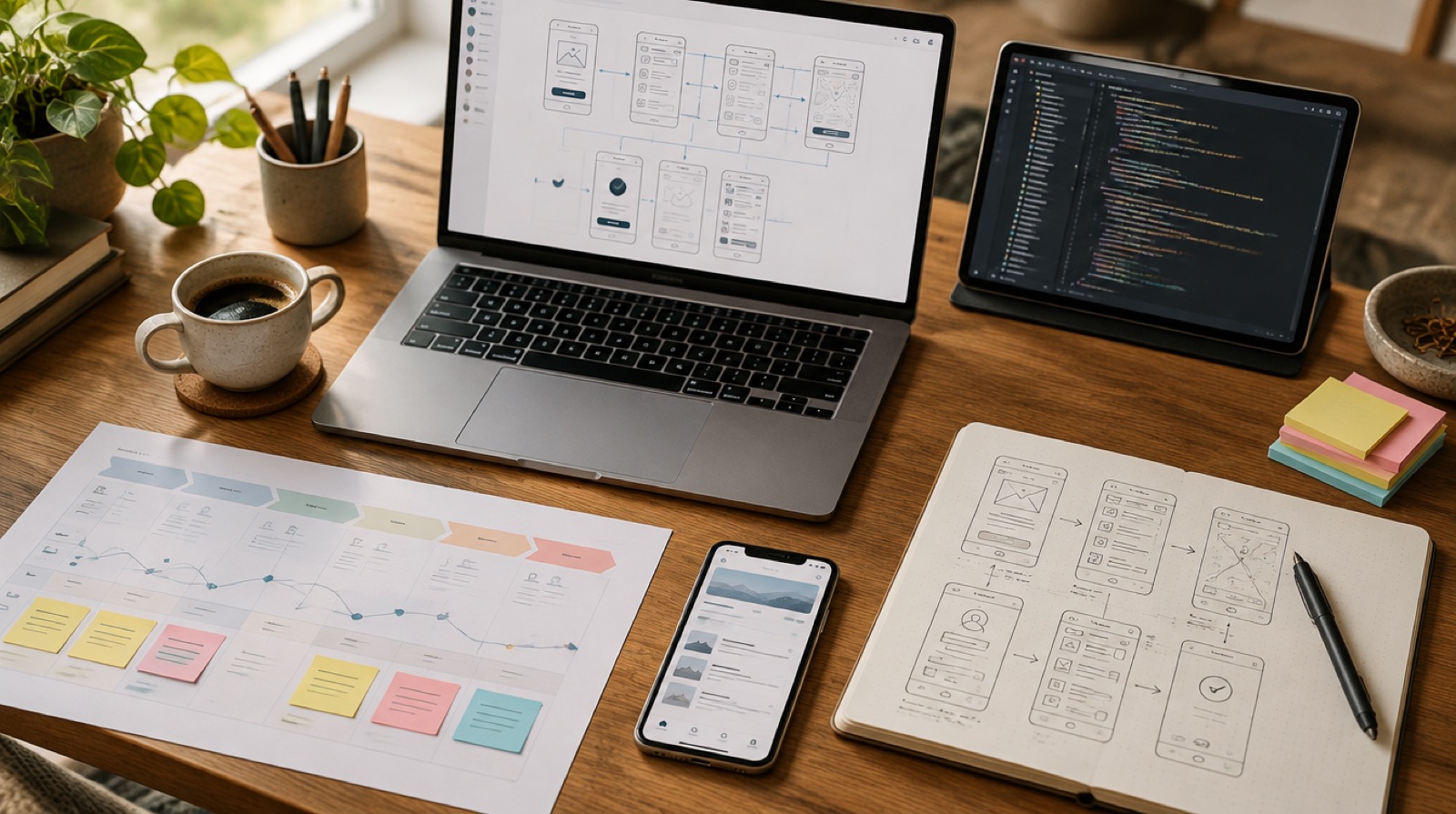
| Static mockups and variations | Hours per screen in Figma | Fast drafts, then design in Figma where it matters | Designer picks the direction |
| Handoff and redlines | Specs, comments, back and forth with engineers | Figma MCP and Claude turn design into code I can review | Designer and engineer review together |
| Interactive prototype | Clickable fake, or nothing | A working build: SwiftUI, WebGL, real physics | Designer decides what deserves to feel alive |
| Motion | Separate motion designer or skipped | AI video (Kling, Higgsfield) and code animation | Designer decides where motion helps |
| Sound effects | Usually skipped in product UI | ElevenLabs and Web Audio in the same build | Designer decides if sound belongs at all |
| User research | Interviews, analytics, community | Same, AI helps summarize | Designer interprets and owns the insight |
| Choosing the problem | Designer with PM and founders | Unchanged | People, always |
Notice where the rows end up. The top half compressed. The bottom half did not move. If most of your week sits in the top rows, the honest answer is that your week is going to change a lot.
Who should be worried, and who should not
I will be direct because vague comfort does not help anyone.
If your value is producing polished screens from someone else's brief, that work is getting cheaper fast. It will not vanish overnight, but the price of it is dropping and the volume a single person can produce is going up. That combination usually means fewer people doing it.
If your value is understanding users, framing problems, and making a call that holds up under pressure, AI makes you more valuable. You can now test your judgment in a real build in days instead of waiting a sprint. The designer who can say "this is the problem, here is a working version, here is why" is hard to replace with anything.
The middle path, and the one I chose, is to close the gap between design and code. That is what a design engineer is. It is not for everyone, and you do not need to write production code to stay relevant. But you should be able to get your idea into a form people can touch, without waiting for permission.
Where this advice does not apply: highly regulated products, large design systems with strict governance, and teams where the bottleneck is alignment, not production. In those places, speed of building is rarely the constraint, and AI changes less than the headlines suggest.
What to learn now if you want to stay a product designer
If I had to start again tomorrow, this is what I would put my time into, roughly in this order:
- Research you run yourself. Talk to users directly whenever you can: a Discord, a Facebook group, a support inbox. At Greenely, people would knock on the office door to complain or ask for features. That kind of signal is the raw material AI cannot invent.
- One path from design to code. Figma plus Claude with the Figma MCP is mine. Pick one stack, such as SwiftUI for native iOS or React for the web, and ship small things in it.
- Motion and sound as design tools. Interfaces should be fun and alive. Physics, motion, sound and surprise are now in reach of one person. Use them where they help, not everywhere.
- Writing down your decisions. When anyone can generate options, the person who explains why one option wins becomes the person teams listen to.
And one thing I would avoid: spending months collecting AI tools. The tools change every few weeks. Judgment compounds.
Questions designers ask me about AI
Will AI replace UX designers too?
The same split applies. AI is absorbing the production side of UX, such as wireframe variations and documentation. It is not absorbing the research and the decision. UX designers who only produce deliverables are exposed. UX designers who own insight and outcomes are not.
Is product design still a good career with AI?
I think so, but it is a different career than the one I started in. It rewards people who can go end to end: understand the problem, design it, and get it working. If you like that, the next few years are a great time to be a designer.
Do product designers need to learn to code now?
You need to be able to ship your ideas in some form people can use. For me that meant code, because AI tools made it realistic. For others it might mean strong prototyping in Figma or Rive. What no longer works is stopping at a static file and waiting.
Can AI design a whole app on its own?
It can generate a whole app's worth of screens. That is not the same as designing an app. Someone still has to decide who it is for, what problem it solves first, and what to leave out. In my experience, that is where most of the value, and most of the risk, lives.
Now I want to hear from you
I can tell you what moved in my workflow. I cannot tell you how it feels in yours. So here is my question to you: what part of your design job has AI already taken over, and do you miss it?
If you are a founder deciding whether you need a designer, an engineer, or someone in between, look at my product design work and the experiments above, then work with me as your product designer. I am happy to talk through what your team actually needs.
hello@ayoubka.com
If you have a web or mobile app idea in mind or you need some advice about product design, feel free to get in touch ✉️