ROLE
Lead Product Designer & Design Engineer
Product Strategy, UX Research, Product Design, Growth Design, Design Systems, Mobile Design, Web Design, Design Engineering
ABOUT COMPANY
ViewStats is a creator intelligence platform built by the team behind MrBeast, helping Youtube creators discover trends, analyze performance, validate ideas, research competitors, and make better content decisions using real-time data and AI-powered tools.
As Lead Product Designer, I led product design across the web platform, mobile app, Chrome extension, website, growth initiatives, AI experiences, and design systems. Later, my role expanded into design engineering, allowing me to contribute directly to production code, ship React components, and work closely alongside engineering teams.
Overview
ViewStats was created to give creators access to the same level of research, testing, and content insights used by the team behind the world's largest YouTube channel.
When I joined, the platform already had strong awareness thanks to MrBeast and a rapidly growing creator audience. But awareness wasn't the challenge.
The challenge was creating a product that creators would return to every day.
Creators had access to more data than ever before, but still struggled to answer simple questions:
- What should I make next?
- Why did this video outperform?
- What thumbnail style is working right now?
- What are my competitors doing differently?
- How can I identify trends before everyone else?
Creators weren't looking for more analytics. They were looking for confidence.
Confidence in what video to make next.
Confidence in which thumbnail would perform.
Confidence in understanding what was actually working in their niche.
Our challenge was transforming ViewStats from a collection of powerful tools into a product creators relied on daily.
Together with Vijay, Chucky Appleby, product leadership, engineers, and growth teams, we focused on transforming ViewStats from an analytics platform into a creator intelligence platform.
Understanding Creators
Before designing new experiences, we spent time understanding how creators actually worked.
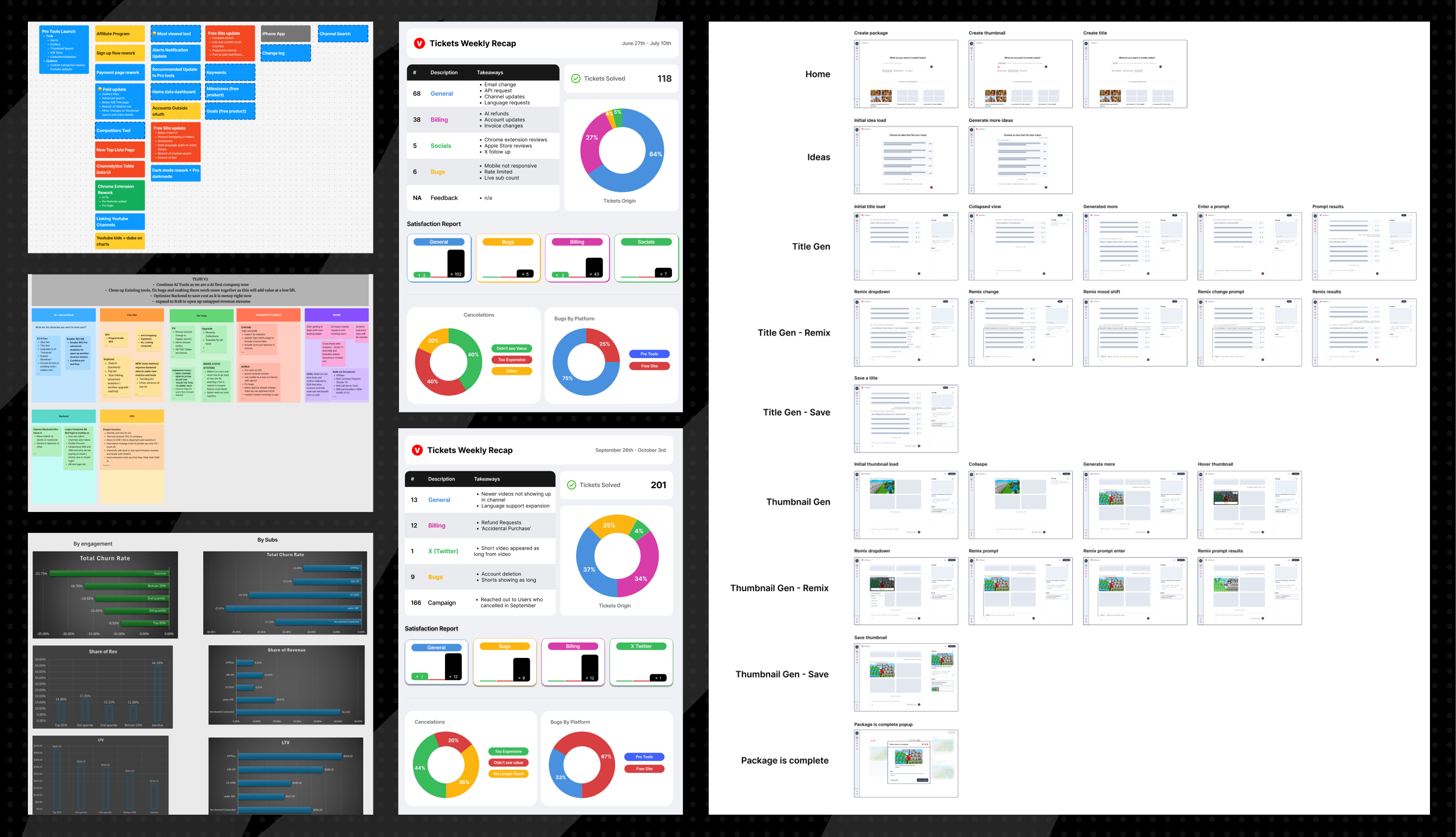
We conducted creator interviews, reviewed onboarding analytics, gathered feedback from the Discord community, analyzed support requests, and ran workshops with internal teams.
A recurring pattern quickly emerged.
Most creators were overwhelmed with information but struggled to turn that information into action.
They weren't asking for more charts.
They were asking:
- What should I make next?
- Why did this video outperform?
- What trends should I pay attention to?
- What are my competitors doing?
- What thumbnails are working right now?
These insights became the foundation for many of the product decisions that followed.
Building a Creator Intelligence Platform
Rather than creating another analytics product, we focused on helping creators discover opportunities and act on them faster.
Over time, ViewStats evolved into a creator workflow platform centered around research, discovery, validation, and execution.
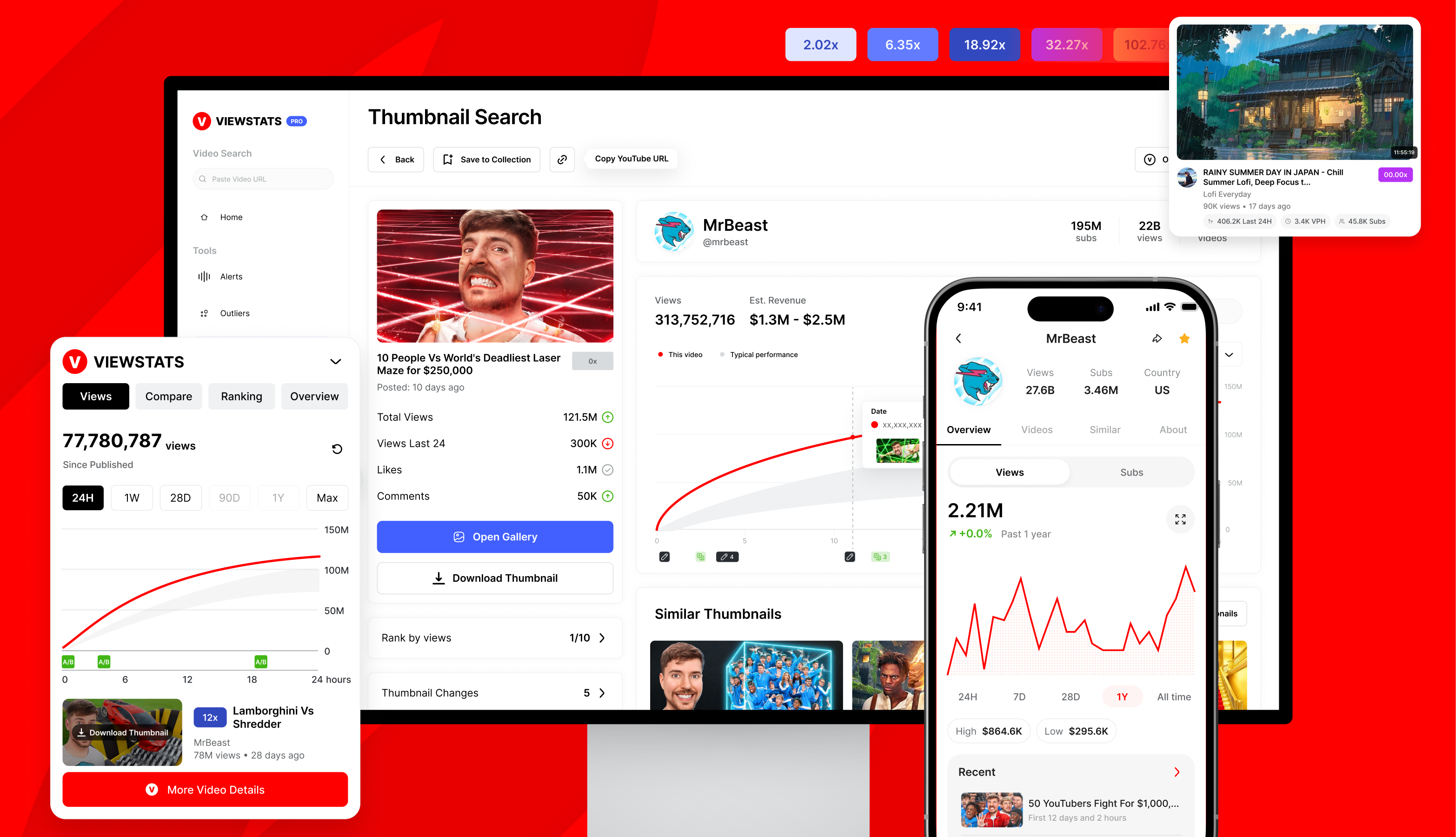
During my time on the product I helped design and improve:
- Outliers
- Competitors Tracking
- Alerts
- Collections
- Thumbnail Research
- A/B Testing
- Creator Dashboard
- Mobile Experiences
- AI Workflows
- Chrome Extension
The goal wasn't to surface more information.
The goal was to help creators answer a single question:
"What should I make next?"
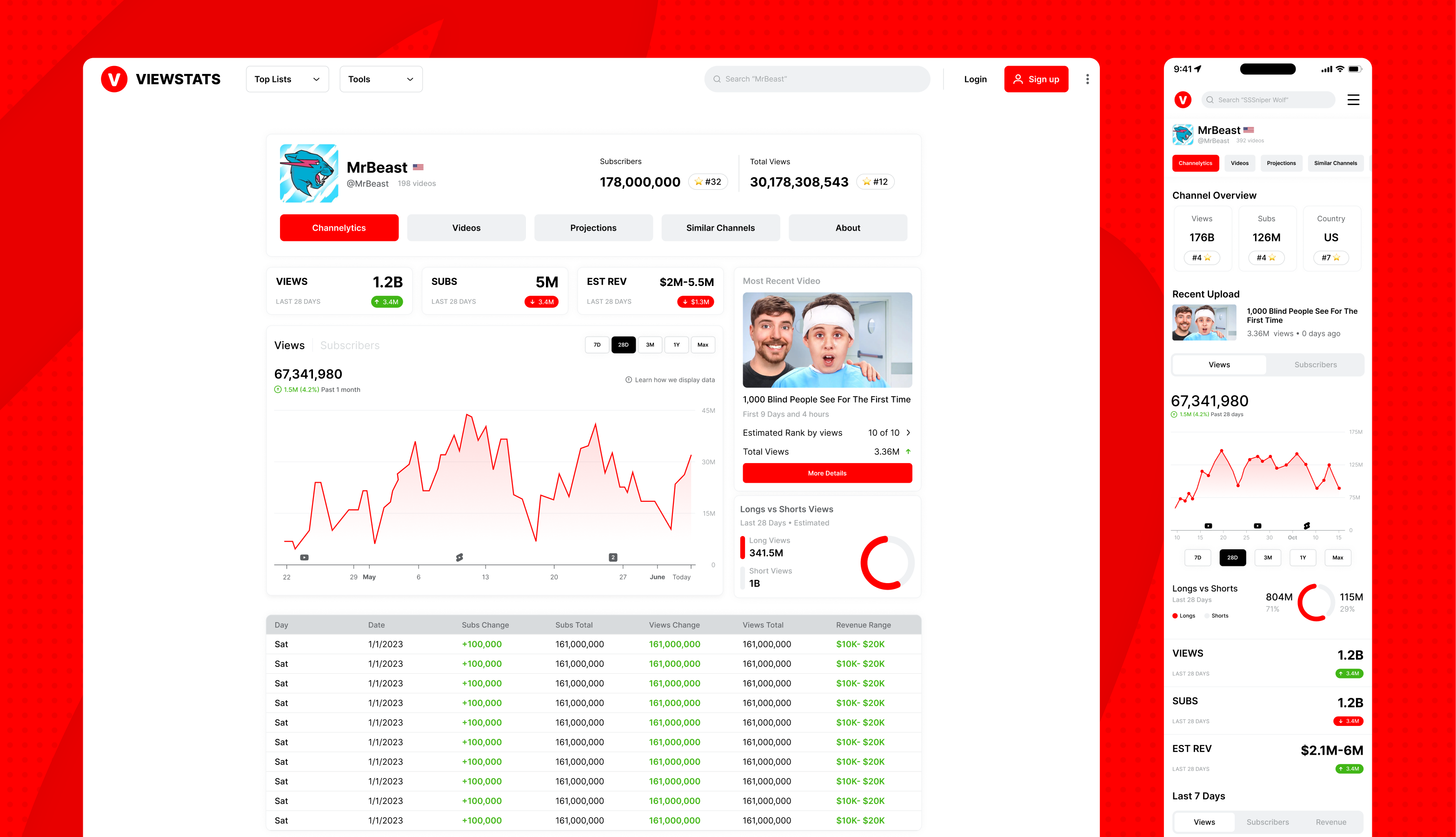
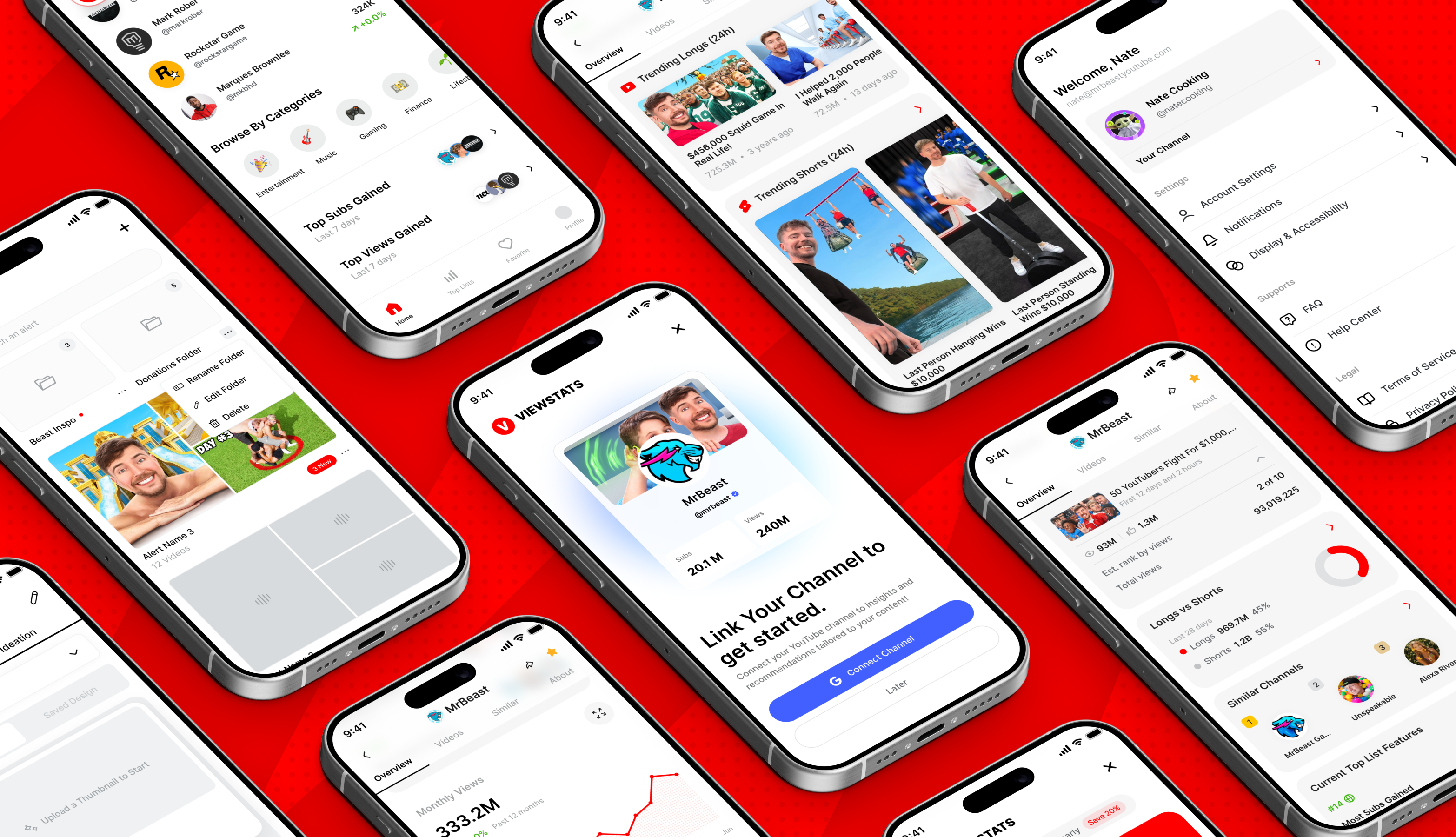
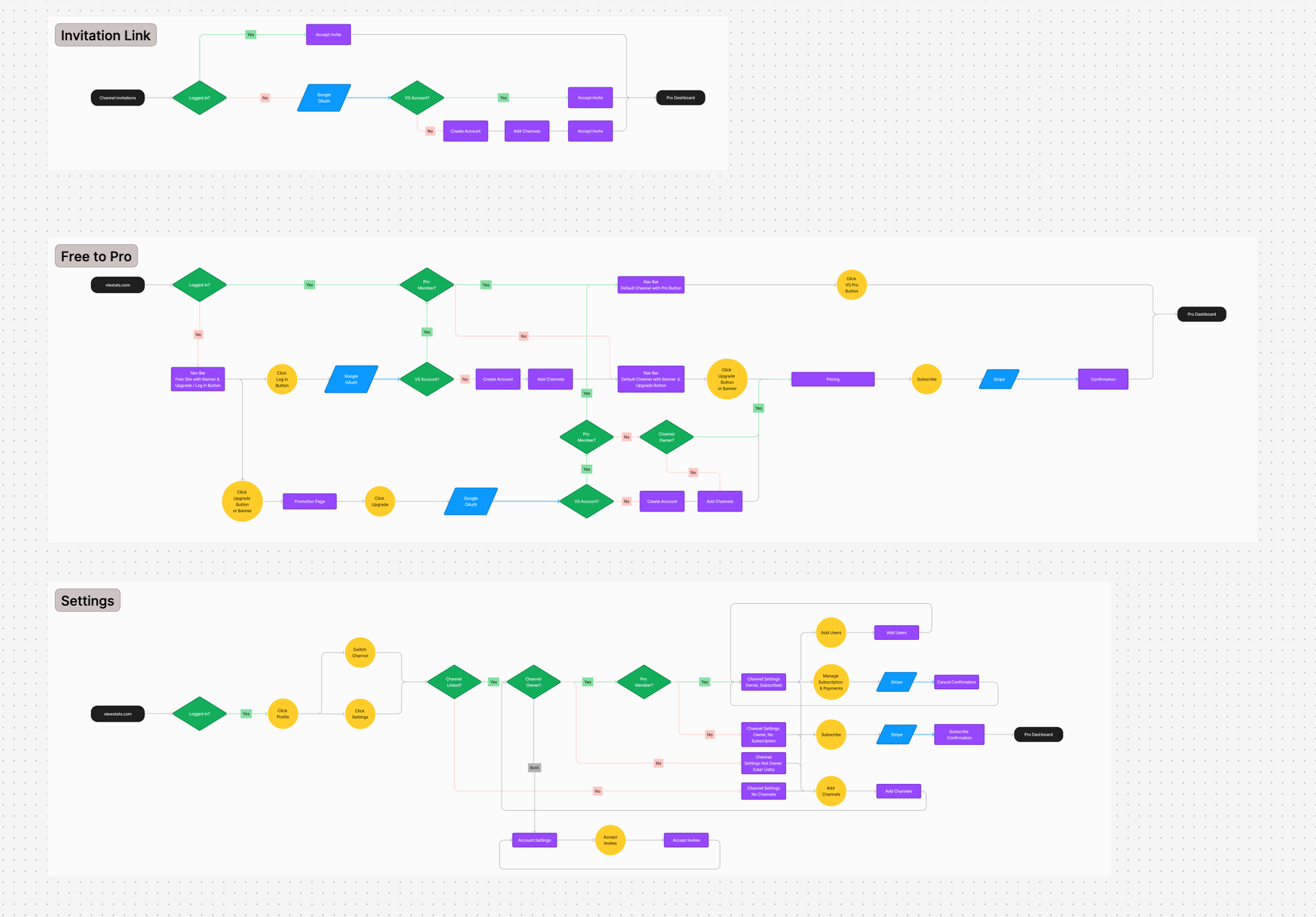
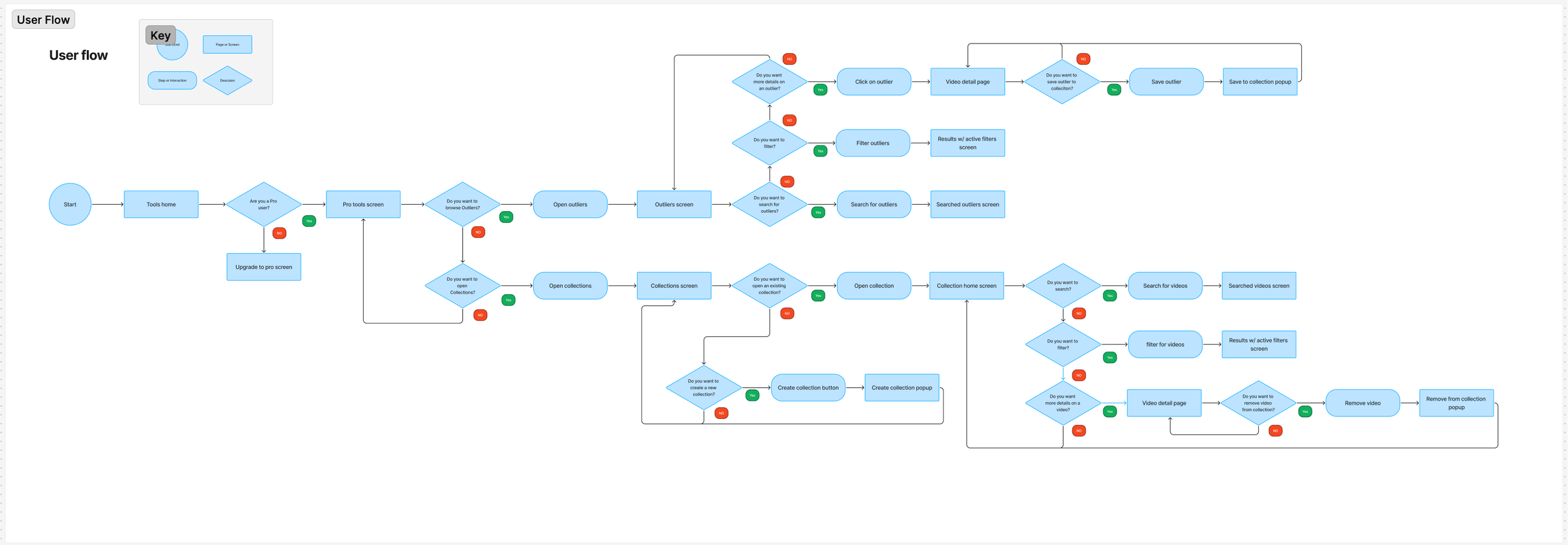
Web Free Users: https://www.figma.com/design/6SY7hgrz4Fy97DaxEoYu1k/Viewstats---Ayoub-Kada?node-id=1-31231
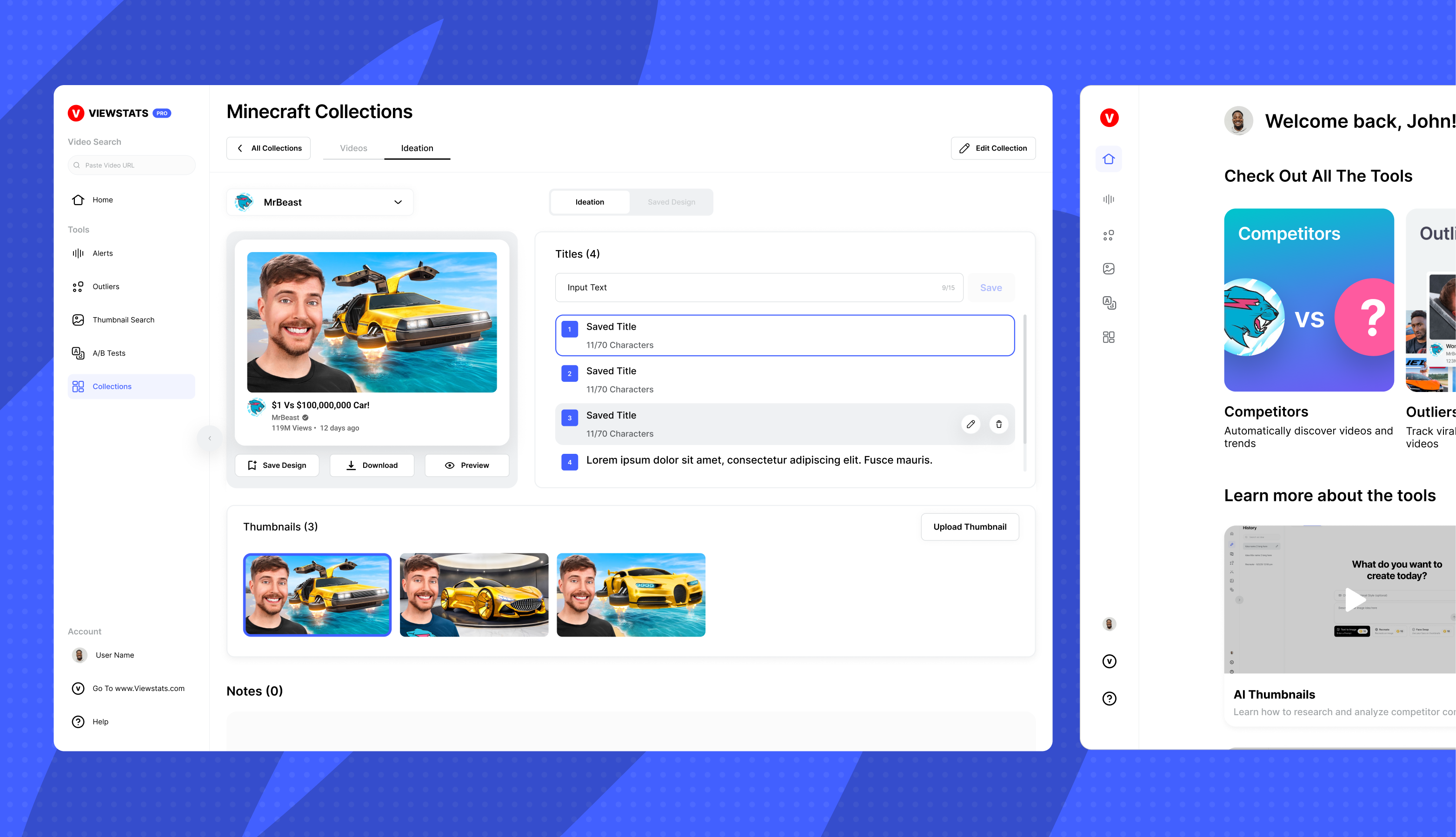
PRO Paid Users: https://www.figma.com/design/6SY7hgrz4Fy97DaxEoYu1k/Viewstats---Ayoub-Kada?node-id=1-116190
Launching AI Tools at Startup Speed
One of the most intense projects during my time at ViewStats was designing and launching a completely new suite of AI-powered creator tools.
The vision was ambitious.
Help creators generate thumbnails, test ideas, create title variations, run experiments, and accelerate creative workflows.
The entire initiative moved from concept to launch in roughly two weeks.
Most of the core product experiences were designed, reviewed, and shipped within a few days while engineering worked in parallel.
The experience included:
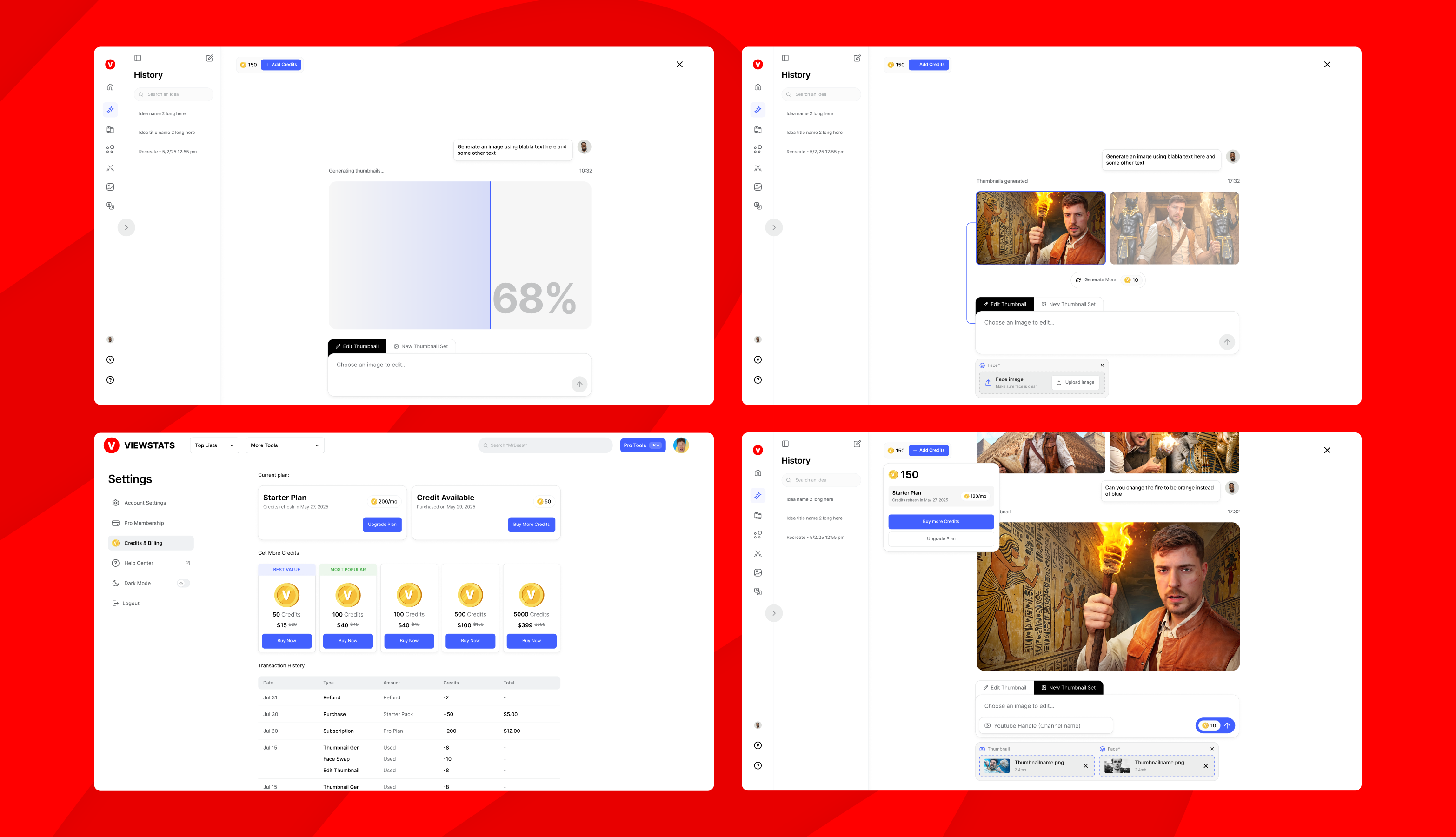
- AI Thumbnail Generation
- Text-to-Thumbnail
- Face Swap
- Thumbnail Variations
- AI Title Generation
- Thumbnail Testing Workflows
The biggest challenge wasn't designing the interface.
It was designing trust.
Creators were being introduced to an entirely new way of producing content, and the product needed to feel powerful without feeling intimidating.
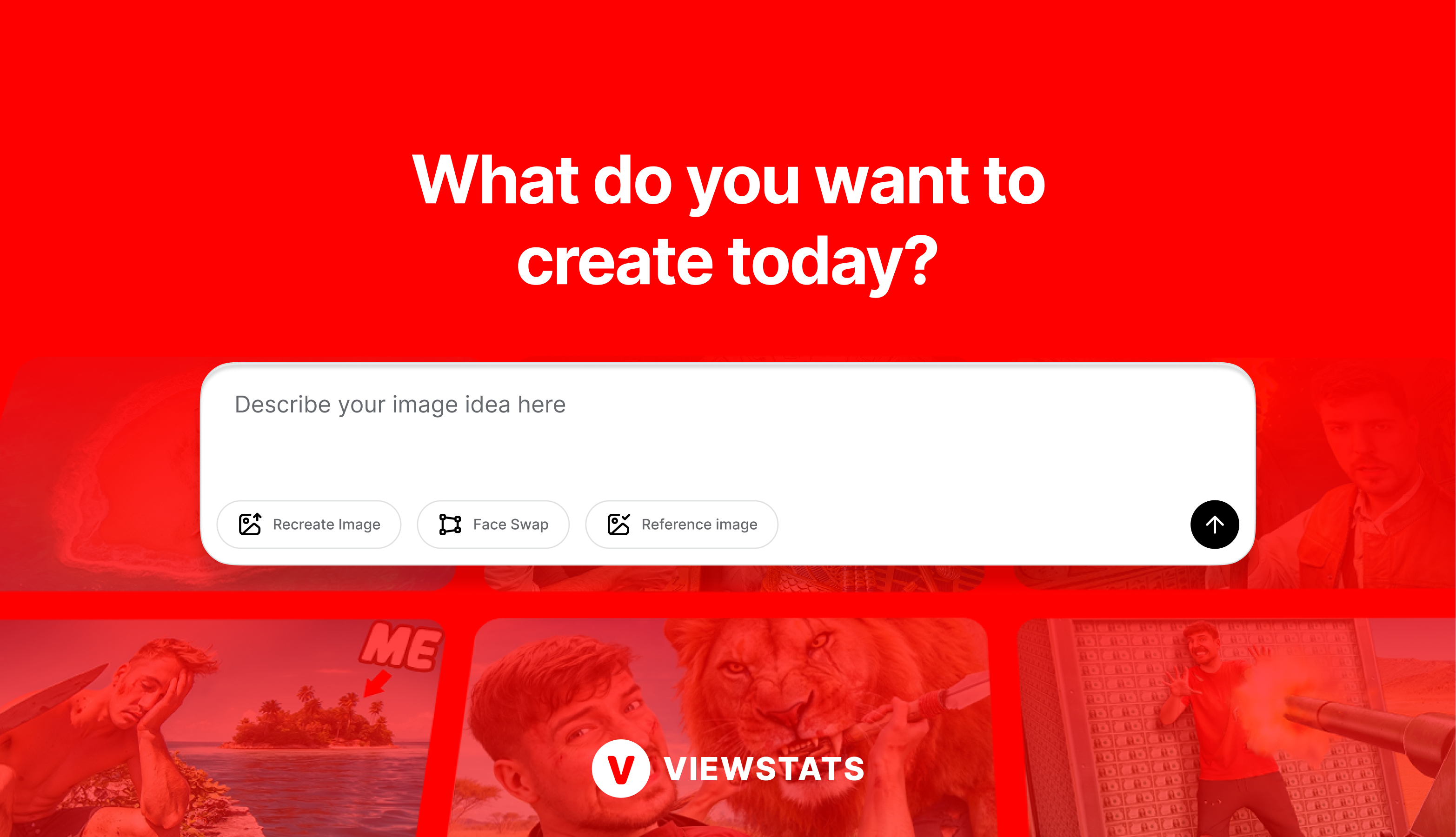
Figma:
https://www.figma.com/design/6SY7hgrz4Fy97DaxEoYu1k/Viewstats---Ayoub-Kada?node-id=1-223783
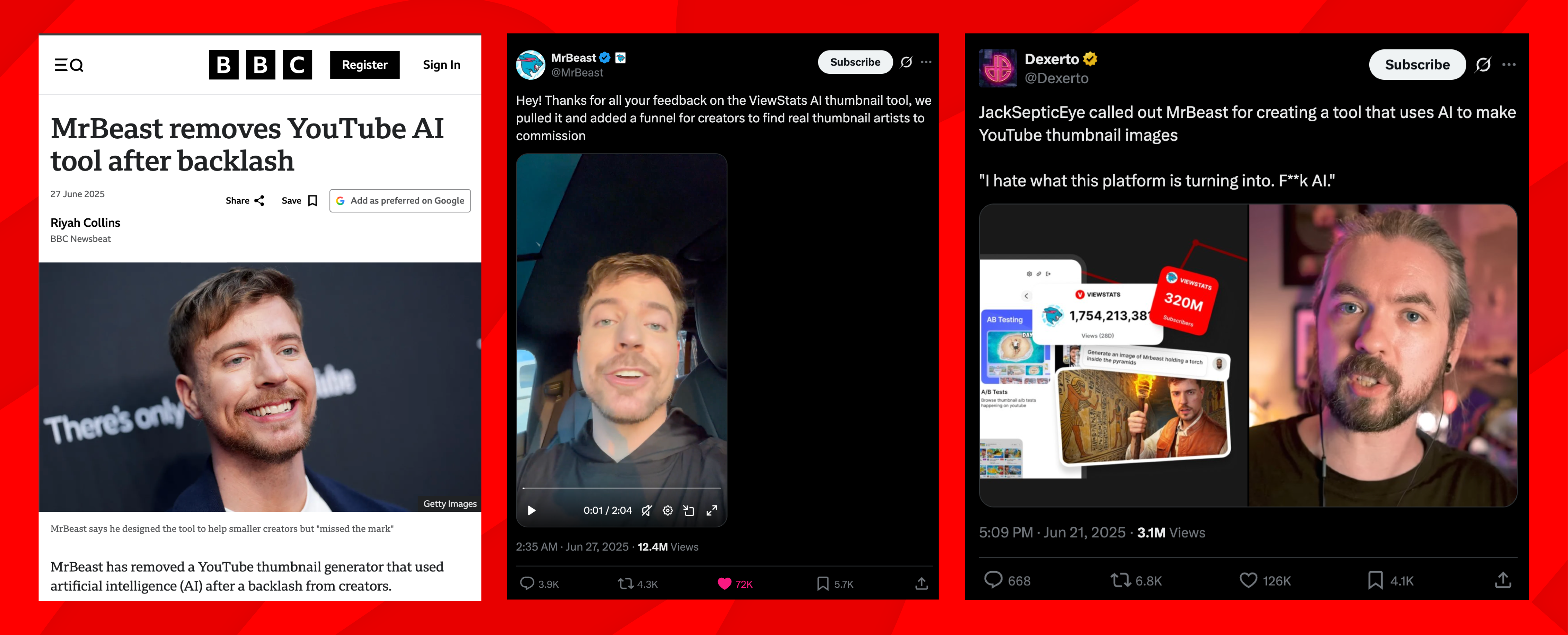
The Backlash
Shortly after launch, the AI tools became one of the most discussed features in the creator ecosystem.
While many creators were excited about faster creative workflows, others raised concerns about the impact AI-generated thumbnails could have on artists and thumbnail designers.
The discussion quickly spread across YouTube, creator communities, social media, and mainstream media coverage.
For a period of time, the product became larger than the feature itself. It became part of a broader conversation around creativity, AI, and the future of creative work.
As a designer, it was a valuable reminder that product decisions don't exist in isolation.
The experiences we create can influence workflows, industries, and communities far beyond the interface. My perspective remained simple.
Creators were already using AI-powered creative tools across dozens of competing products. The challenge wasn't deciding whether AI would exist. The challenge was designing tools that helped creators move faster while keeping humans at the center of the creative process.
https://x.com/MrBeast/status/1938410924253274473?s=20
https://www.bbc.com/news/articles/c15wvvjv402o
Improving Creator Activation
One of the largest growth opportunities we uncovered was channel connection.
Many creators were signing up but hesitating to connect their YouTube channel despite it unlocking some of the platform's most valuable features.
Through funnel analysis and user research, we discovered that users often didn't fully understand what they would gain after connecting.
Instead of repeatedly prompting users to connect, we redesigned the experience around value communication.
We introduced stronger onboarding moments, improved empty states, contextual prompts, and clearer explanations of what creators would unlock.
The strategy was simple:
Show value first. Ask for trust second.
Result
13% → 65%+ (Creator Channel Connection Rate)
One of the highest-impact growth improvements during my time on the platform.
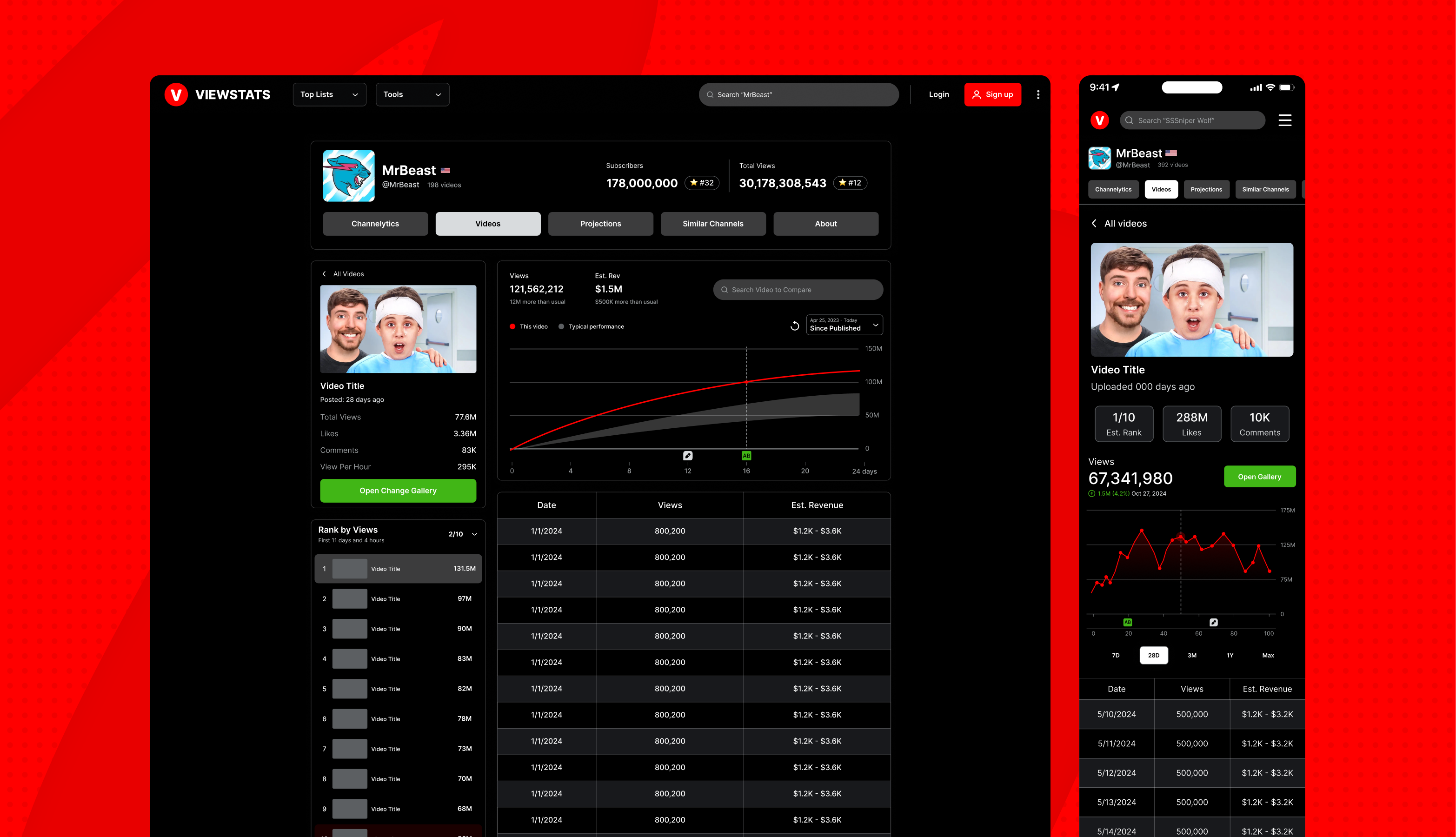
Chrome Extension
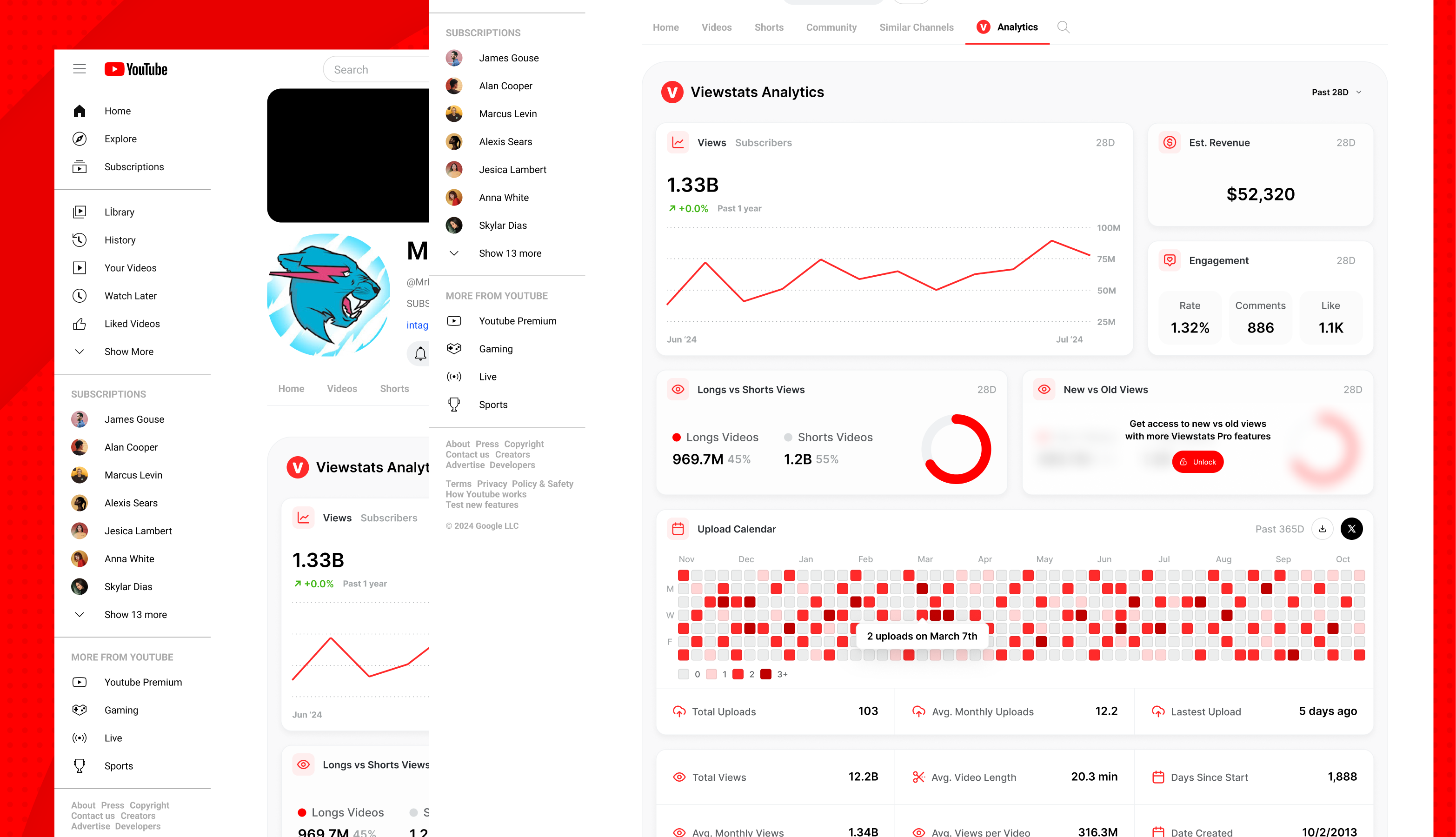
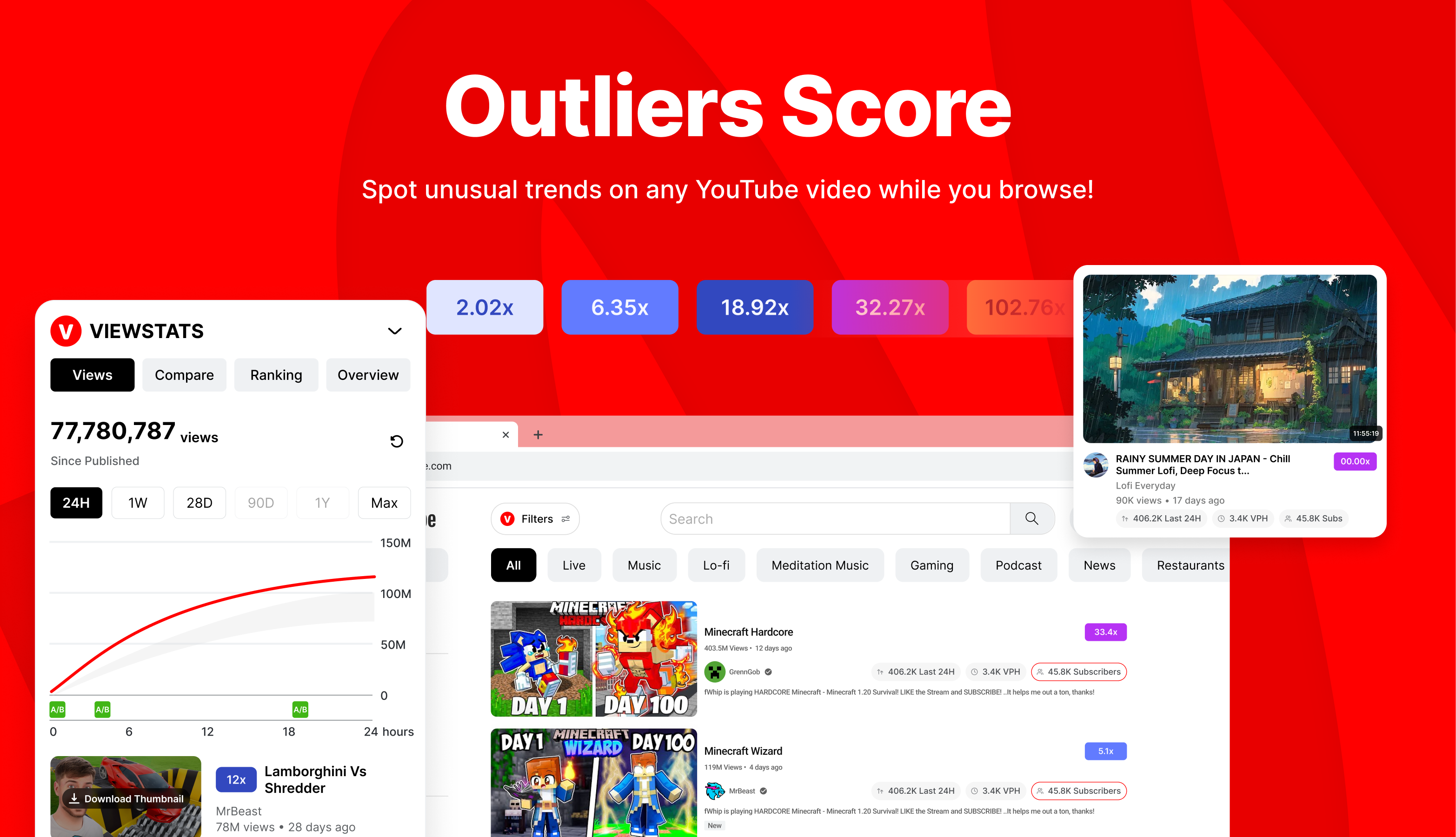
One of the most important parts of the ViewStats ecosystem was the Chrome Extension.
Rather than forcing creators to leave YouTube and open another platform, we brought insights directly into their existing workflow.
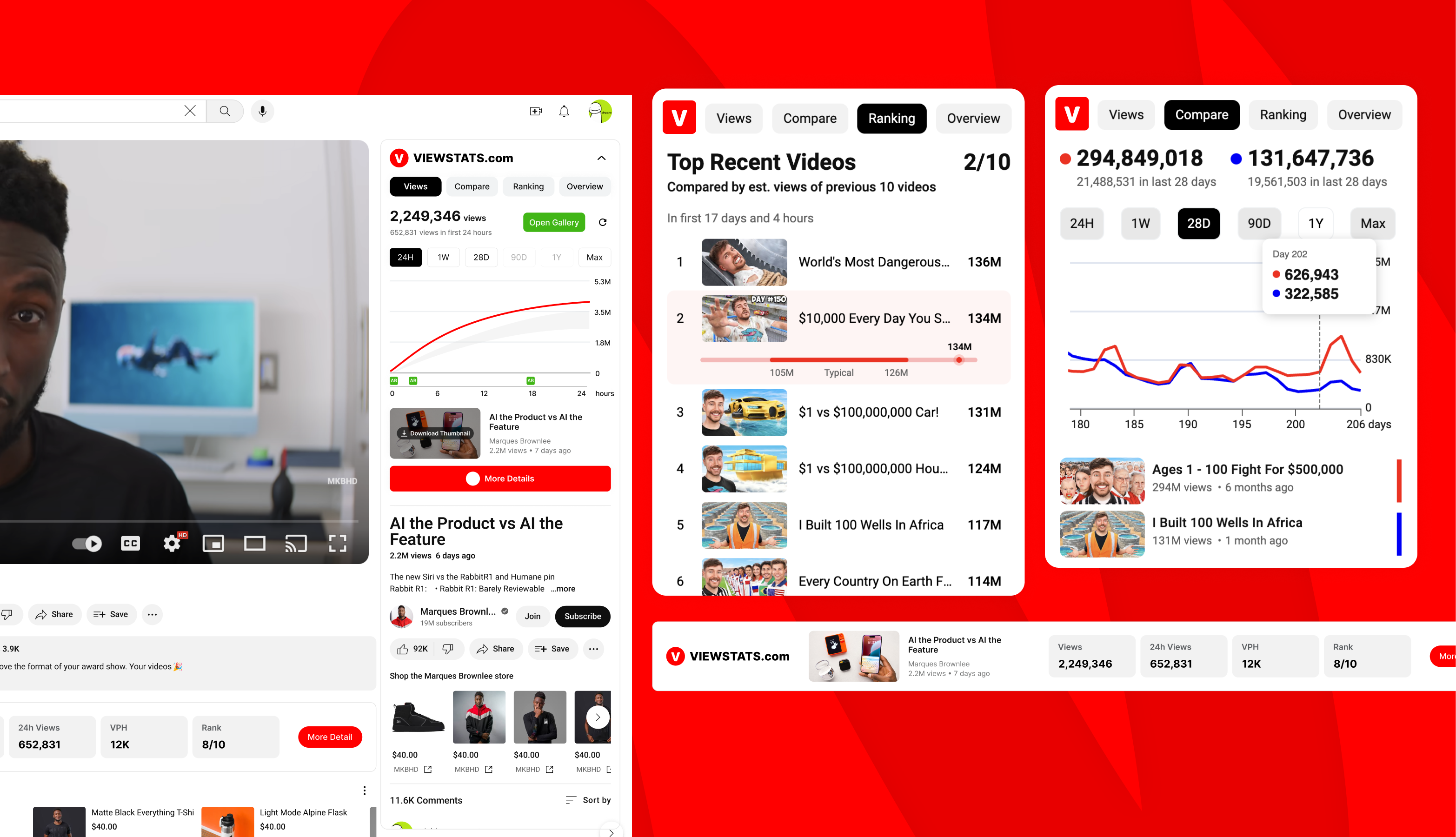
The extension surfaced channel and video intelligence directly inside YouTube, allowing creators to research content without constantly switching tabs.
Key experiences included:
- Views Over Time
- Video Performance Analysis
- Thumbnail & Title Change History
- Channel Insights
- Trending Channels
- Video Comparison Tools
- Ranking Systems
- One-Click Analytics
The challenge was balancing utility with simplicity.
We needed to surface powerful information without disrupting the YouTube experience.
The extension ultimately became a major acquisition and retention channel, growing to more than 200,000 users and becoming one of the most valuable touchpoints within the ViewStats ecosystem.
https://chromewebstore.google.com/detail/viewstats-youtube-video-c/licaccaeplhkahfkoighjblahbnafadl
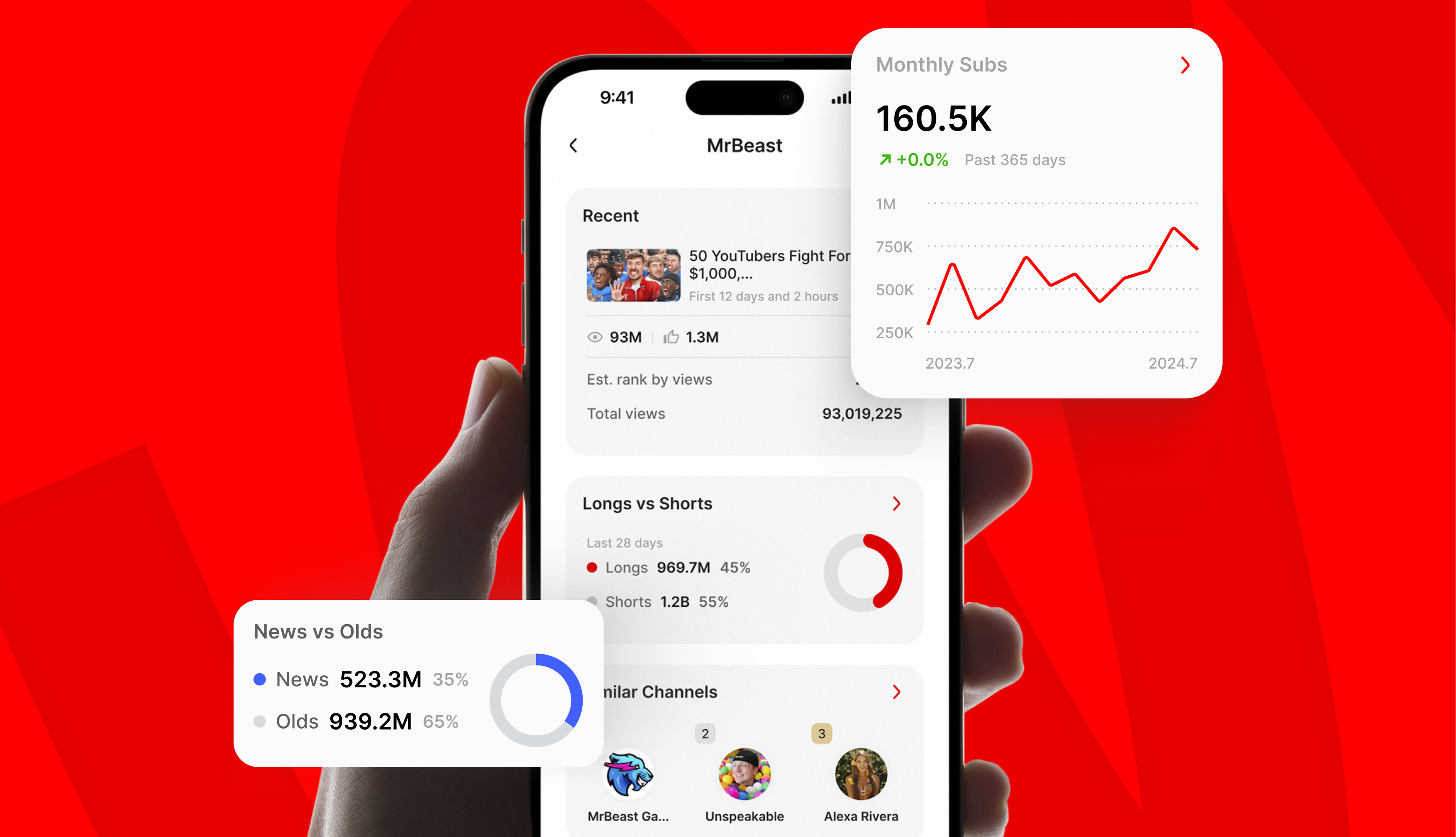
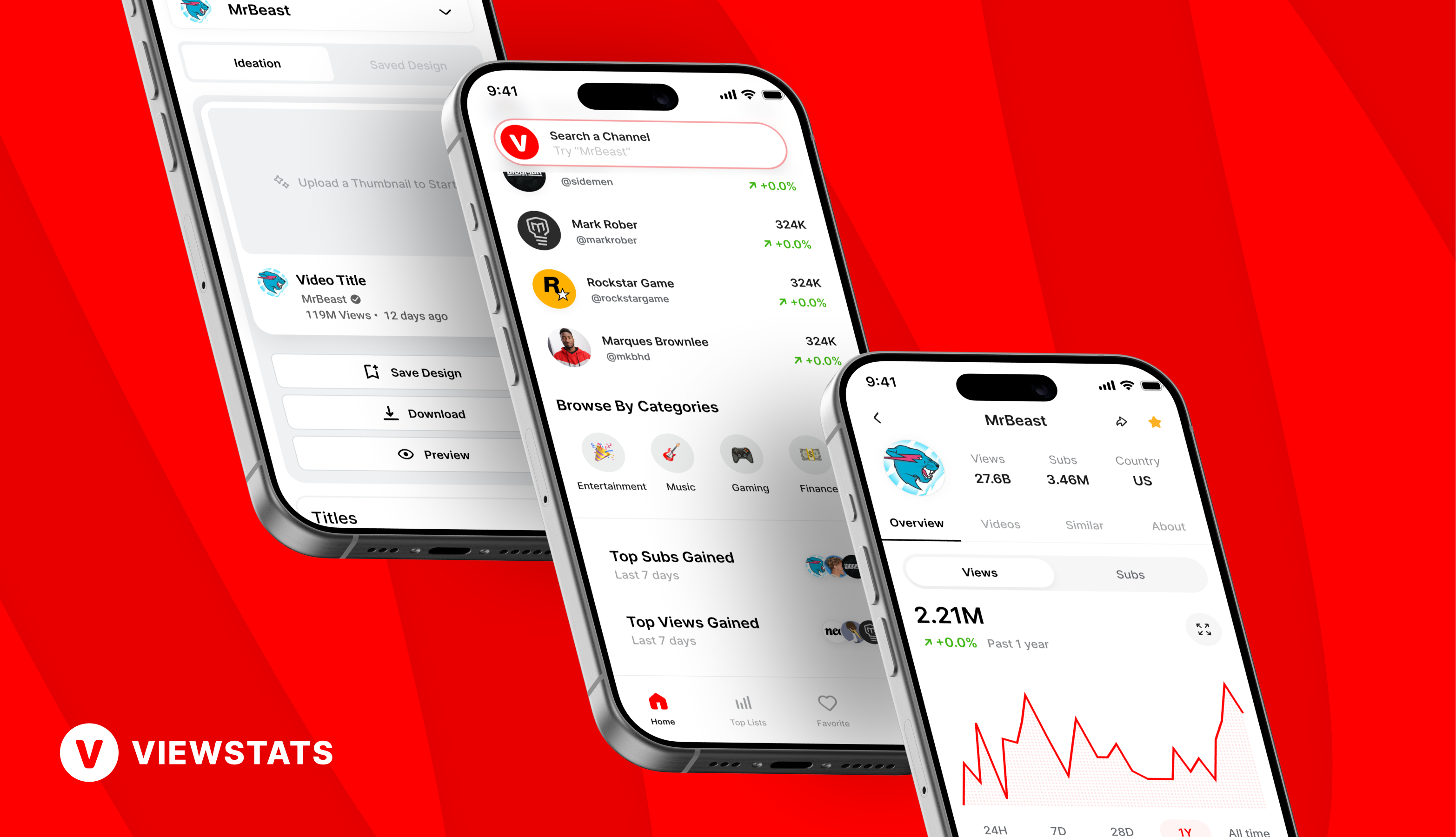
Mobile App Experience
While the web platform supported deeper research and analysis, the mobile app had a different role.
Creators don’t always want to sit at a desktop to check performance, track competitors, or explore what is happening in their niche.
They needed a faster, lighter experience they could use between uploads, shoots, edits, or meetings.
The challenge was translating a data-heavy product into a mobile experience that felt simple, quick, and focused.
We designed mobile around the moments creators actually needed on the go:
- Checking channel performance
- Reviewing video rankings
- Tracking competitors
- Discovering opportunities
- Accessing Pro insights
- Following trends
- Moving quickly between creator data
The mobile experience had to support both free users and paid subscribers, while keeping premium tools visible enough to communicate value without making the product feel locked or frustrating.
For free users, the focus was clarity, discovery, and fast access to core analytics.
For Pro users, the focus was unlocking deeper insights, advanced tools, and faster research workflows.
The result was a mobile experience that extended ViewStats beyond desktop and made the platform feel more connected to a creator’s daily workflow.
Building the Design System
As ViewStats expanded, maintaining consistency became increasingly challenging.
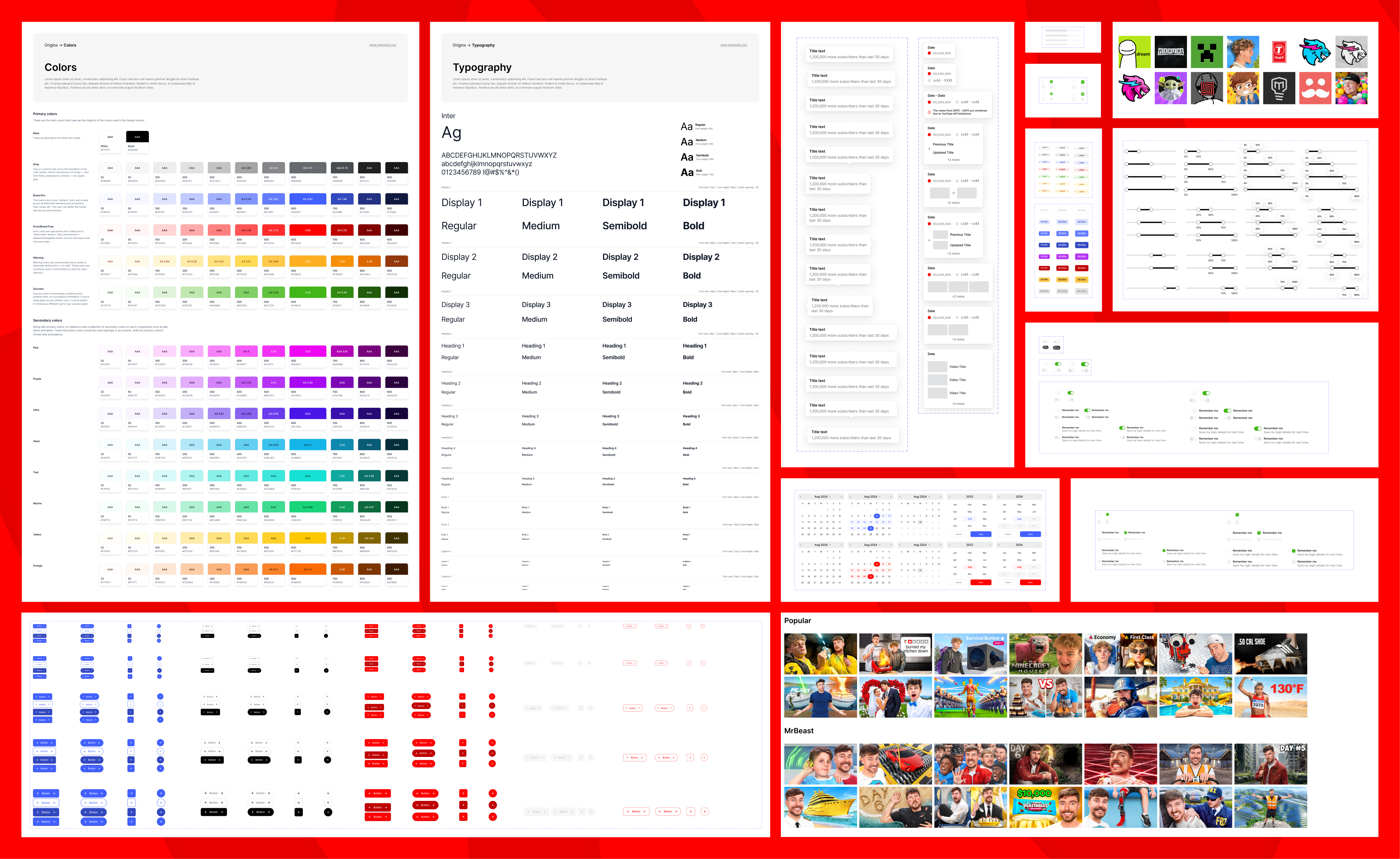
To support faster product development, I created and evolved the design system used across web, mobile, marketing experiences, and browser extensions.
The system established foundations for:
- Typography
- Color
- Navigation
- Data Visualization
- Dashboard Components
- Tables
- Forms
- Empty States
- Mobile Patterns
- Growth Experiences
- Variables & Color Tokens
This helped reduce design debt, improve consistency, and significantly accelerate both design and development workflows.
https://www.figma.com/design/6SY7hgrz4Fy97DaxEoYu1k/Viewstats---Ayoub-Kada?node-id=1-274133&t=QBGPdlPxJRY9Vd4w-1
From Product Designer to Design Engineer
As the company grew, my role naturally expanded beyond traditional design responsibilities.
Instead of stopping at Figma handoff, I began working directly inside the codebase.
Using Cursor, Claude Code, React, TypeScript, and GitHub, I started delivering production-ready components directly to engineering teams.
For many projects I would:
- Design experiences
- Prototype interactions
- Build React components
- Generate TypeScript implementations
- Open pull requests
- Review implementation quality
- Collaborate directly with engineers
This dramatically reduced iteration cycles and helped move ideas from concept to production significantly faster.
It also strengthened collaboration between design and engineering while allowing me to contribute beyond traditional product design responsibilities.
Results
During my time working on ViewStats:
- 500,000+ users across the platform
- 200,000+ Chrome Extension users
- 100,000+ mobile downloads
- 17,000+ creators in the Discord community
- 13% → 65%+ creator activation increase
- AI creator tools launched
- Design system established across products
- Design engineering workflow introduced
- Product evolved into a profitable creator platform
Perhaps most importantly, ViewStats became increasingly driven by product value rather than relying solely on external promotion.
Creators returned because the platform helped them make better decisions.
Reflection
Working on ViewStats reinforced something I've seen across many successful products.
People rarely want more information.
They want clarity.
The most successful experiences weren't the ones showing the most data.
They were the ones helping creators understand what action to take next.
Helping turn workflows used by one of the world's most successful creator teams into products used by hundreds of thousands of creators remains one of the most rewarding experiences of my career.